History
History curriculum intentions and vision at PTM
At Pear Tree Mead Academy, our history curriculum fosters pupils' curiosity and enables them to think like historians. The curriculum is built around meaningful and engaging historical enquiries that allow students to investigate the past and construct their own reasoned arguments, rather than passively receiving information. This process helps students build a deep, contextual understanding of Britain's past and the wider world.
How we implement history
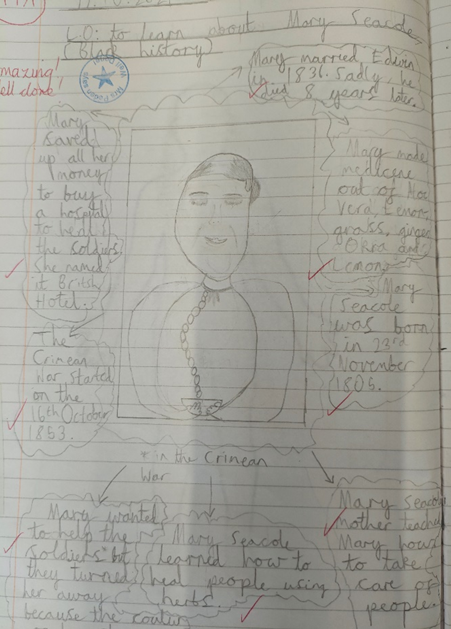
Our history teaching intentionally develops both substantive knowledge (the facts about the past) and disciplinary knowledge (the skills and concepts that historians use). Students learn to use these together to understand and interpret history at their level.
- Interpreting sources: Students are taught how to use and evaluate a range of primary and secondary sources, including artifacts, texts, and stories, to construct historical claims.
- Developing historical concepts: We explicitly teach and revisit key historical concepts, such as cause and consequence, change, and significance, so students can apply them to different historical periods.
Creating coherent narratives: The curriculum is structured to build a chronological narrative from the earliest times to the present. We use a combination of in-depth studies and broader overviews to help students build a mental timeline and organise their basic historical knowledge.
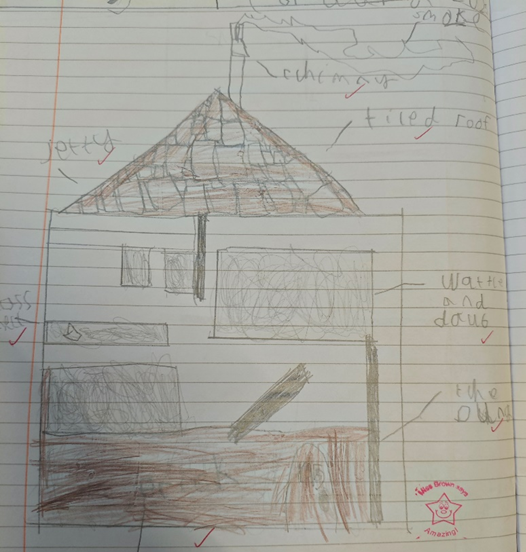
- Making connections over time: The curriculum encourages students to make connections and draw contrasts across different time periods, helping them to see long-term trends and developments. This can be seen in the reflections on clothing, housing, food and workforce.
- Fostering historical perspective: Students are encouraged to discern how and why different interpretations of the past have been constructed, enabling them to recognise that history is a contested subject.
Examples of pedagogical implementation
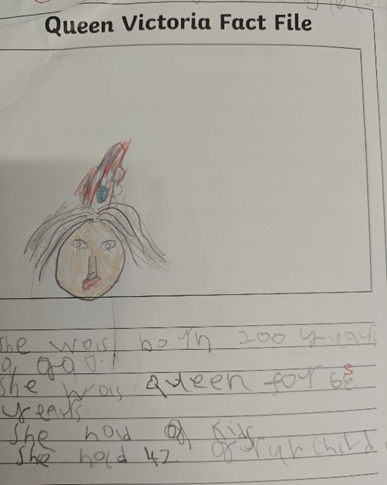
- Key Stage 1: Pupils' chronological understanding is developed by exploring changes within living memory and making comparisons with events beyond their experience. They are introduced to historical concepts by investigating significant individuals and local events through a focus on evidence and simple enquiry. At PTM we encourage pupils’ to engage with their parents and wider family to understand their personal and cultural history.
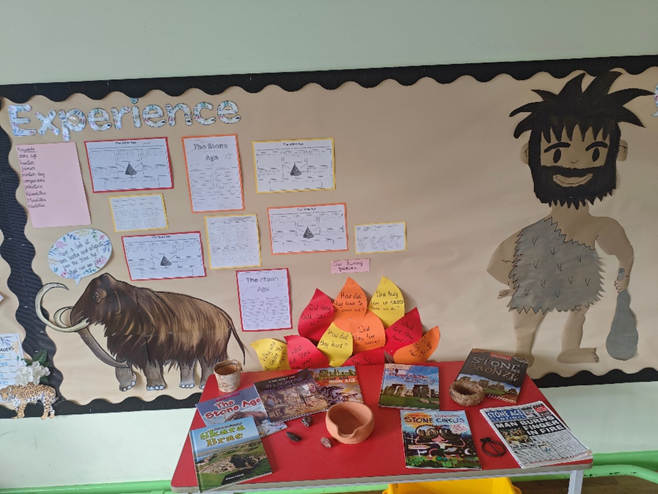
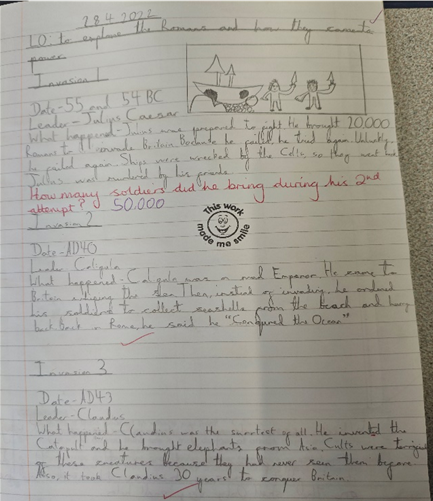
- Lower Key Stage 2: Students conduct enquiries into key periods like the Stone Age, Roman Britain and Anglo Saxons. They analyse and evaluate a wider range of sources to answer questions about change and use increasingly sophisticated historical terminology. Pupils’ are encouraged to use the language related to the eras and use these in their summaries. Pupils’ are encouraged to use sources of information in ways that go beyond simple observations to answer questions about the past.
- Upper Key Stage 2: Pupils compare sources to create evidentially supported accounts of events like the Viking incursions, the legacy of the Greek culture as well as the Mayan civilisation. They explore the legacy of civilizations and analyse trends, making informed judgments about why contrasting interpretations of the past exist. The children also learn about the impact of World War II and how this shaped our communities and local area.
Assessment
Assessment at PTM is an ongoing process integrated into the curriculum to inform teaching and guide student progress. Teachers use formative assessment techniques during lessons to evaluate students' developing understanding through questioning and debate. Summative assessments, such as structured writing or presentations, evaluate students' ability to construct informed responses and meet the objectives of a historical enquiry.
Barriers to learning and inclusion
At Pear Tree Mead, we are committed to making our history curriculum accessible to all pupils. Our use of enquiry-based learning and multi-sensory activities ensures engagement and provides different access points for a diverse range of learners. First-hand experiences, such as workshops and trips, are used to overcome learning barriers and connect abstract ideas to tangible experiences.
Parent involvement
History is all around us and can be explored using a simple walk through town. However, if you feel more adventurous the Harlow Museum is a great way to get children involved in history. There are a variety of museums that are free of charge in and around London. If you were to venture out a little further then there are many Roman settlements close by including St Albans and Colchester. Below is a selection of museum near Harlow.
|
Museum |
Address |
City |
Category |
|
South Road |
History & Anthropology |
||
|
Muskham Road |
History & Anthropology |
||
|
Stables Courtyard Copped Hall Crown Hill |
History & Anthropology |
||
|
Nursery Road, High Beach |
Nature & Natural History |
||
|
Station Road |
Science & Technology |
||
|
18 Bull Plain |
History & Anthropology |
||
|
Bulls Cross |
Art & Design |
||
|
Merlin Way |
Science & Technology |
||
|
High Street |
History & Anthropology |